Non-Functional Turf
Background
Assembly Bill 1572 (AB 1572), passed in 2023, bans the use of potable (drinking) water to irrigate non-functional turf for specific properties.
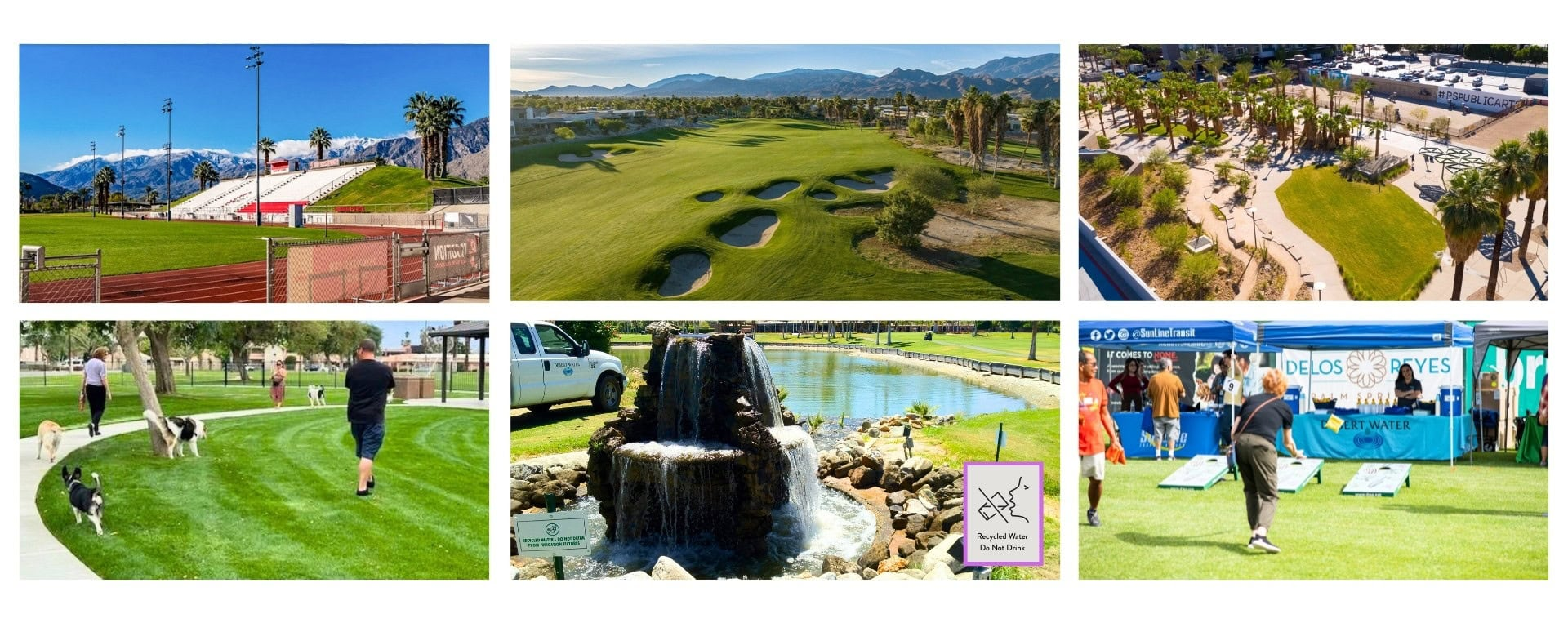
DWA has defined functional turf as “Existing turf grass areas that have a clear, dedicated function, are used regularly, provide a recreational benefit to the community/property, are an essential part of a commercial service or operation, provide reasonable spacing and safe access, have a history of programmed events past, present, and future, or they are future turf installations planned for a property which meet the requirements of Functional Turf.”
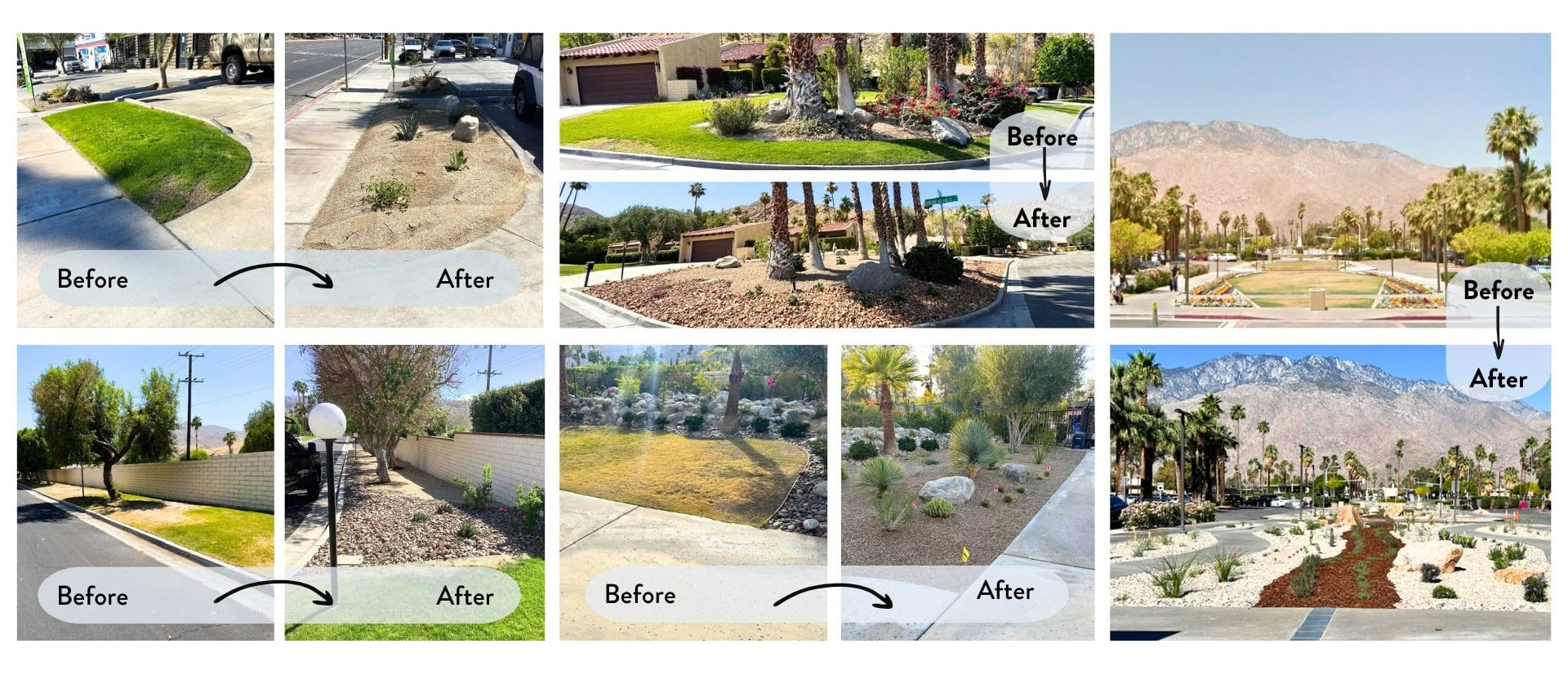
Non-functional turf is an area that does not meet the above requirement.
The DWA Board of Directors adopted Ordinance No. 80 in 2025 to help define functionality and guide compliance. As part of the ordinance, customers are required to submit a self-certification for their property by the deadline. Click here to fill out the self-certification form.
Ordinance No. 80Self-certification deadline by property type:
- June 30, 2026 – State and local government properties
- June 30, 2027 – Commercial, industrial, and institutional properties
- June 30, 2028 – HOA common areas, mobile home parks, apartments, and other common interest developments
- June 30, 2030 – Government properties in disadvantaged communities
Compliance will be assessed and penalties for watering nonfunctional may be assessed by the deadlines below:
Compliance deadline by property type:
- January 1, 2027 – State and local government properties
- January 1, 2028 – Commercial, industrial, and institutional properties
- January 1, 2029 – HOA common areas, mobile home parks, apartments, and other common interest developments
- January 1, 2031 – Government properties in disadvantaged communities
Frequently Asked Questions (FAQs)
General
AB 1572 was signed into law in 2023. It prohibits the use of potable drinking water to irrigate or water non-functional turf on for governmental properties, HOA communities and commercial, industrial, and institutional properties. It’s part of the state’s broader effort to conserve water and promote sustainable/native landscaping in the face of increasingly extreme weather with large swings between drought and deluge.
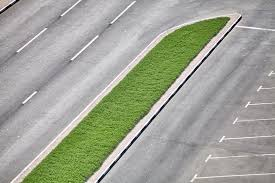
Non-functional turf is grass that is purely ornamental in nature and that is not used for recreation or community purposes. For example, turf in medians, around office buildings, business frontages, underused common areas at HOAs, or parking lots. It’s different from turf/grass in parks, sports fields, or areas meant for recreation.
The law applies to commercial, industrial, and institutional sites, HOA common areas, other common interest developments, apartments, and government buildings.
It does not apply to single-family homes, recreational spaces like parks and sports fields, or areas watered with recycled water.
Commercial and industrial properties cover most businesses maintaining landscaping within the Desert Water Agency service area. Industrial properties are distinct, because industrial processes may use a large amount of water for a unique, but unavoidable, business need, such as manufacturing. Institutional properties are other types of properties that are not considered a traditional business such as nonprofit organizations, churches, or hospitals, among others.
Self-certification deadline by property type:
- June 30, 2026 – State and local government properties
- June 30, 2027 – Commercial, industrial, and institutional properties
- June 30, 2028 – HOA common areas, mobile home parks, apartments, and other common interest developments
- June 30, 2030 – Government properties in disadvantaged communities
Compliance deadline by property type:
- January 1, 2027 – State and local government properties
- January 1, 2028 – Commercial, industrial, and institutional properties
- January 1, 2029 – HOA common areas, mobile home parks, apartments, and other common interest developments
- January 1, 2031 – Government properties in disadvantaged communities
DWA commissioned a conservation study which found that removing grass saves up to 67 gallons per sq ft per year. With millions of square feet of non-functional turf in DWA’s service area, this is a huge benefit towards water conservation efforts.
Watering non-functional turf with potable water is considered a wasteful use of water, regardless of DWA’s healthy water supply. Factors such as drought, climate change, and population growth may also shift this balance. This means that conservation is a relatively inexpensive and effective tool to stretch the supplies we do have.
Due to these new state laws and regulations, DWA is being tasked with reducing wasteful uses and water demand, so that our healthy supply is an even greater benefit for future generations.
Ordinance
AB 1572 requires public water systems (including DWA) revise their regulations, ordinances, or policies to include the requirements of AB 1572.
DWA passed its ordinance to allow the maximum amount of time and guidance to our customers before self-certification and compliance is required.
The ordinance:
- Defines “functional” and “non-functional” turf.
- Requires customers to self-certify their property by six months before their compliance deadline.
- Prohibits the use of potable water to irrigate non-functional turf at commercial, industrial, and institutional sites, HOA common areas, other common interest developments, apartments, and government buildings by the compliance deadline.
- Outlines enforcement measures.
- Establishes penalties for non-compliance.
A link to the ordinance can be found linked in the above text.
Failure to self-certify 6 months before compliance deadline may result in the following penalties:
- July: $125 penalty for self-certification non-compliance.
- August: $250 penalty for self-certification non-compliance.
- September and Beyond: $500 penalty per month of self-certification non-compliance.
The use of potable water to irrigate non-functional turf is a violation and will no longer be legally permissible after the compliance dates. Once the compliance deadlines have passed, affected water customers who continue to water non-functional turf on their property will be subject to the following penalty schedule:
- First Violation – Written warning, allowing thirty (30) calendar days for a response with corrections.
- Second Violation – $125.00 for second violation or failure to correct first violation in the 30 day period.
- Third Violation – $250.00 if third violation is verified (15) calendar days after the second violation notice.
- Fourth Violation – $500.00 if fourth violation is verified (5) calendar days after the third violation notice.
- Fifth Violation – $1,000.00 if fifth violation is verified (5) calendar days after the fourth violation notice.
- Sixth Violation – $2,000 if sixth violation is verified (5) calendar days after the fifth violation notice.
- Beyond Sixth Violation – $2,000 per verified violation (3) calendar days after the last violation notice.
A good faith effort to comply will be taken into consideration and affected water customers should communicate their plans for corrective action to the Agency.
Staff will review the forms for compliance based on the ordinance’s definitions and requirements.
The Agency may conduct site inspections to verify compliance according to a customer’s self-certification or to validate/investigate any reported violations. Affected Water Customers must cooperate with inspections and provide access to their properties, as needed.
DWA has defined functional turf as “Existing turf grass areas that have a clear, dedicated function, are used regularly, provide a recreational benefit to the community/property, are an essential part of a commercial service or operation, provide reasonable spacing and safe access, have a history of programmed events past, present, and future, or they are future turf installations planned for a property which meet the requirements of Functional Turf.”
Non-functional turf is an area that does not meet the above requirement.
Functional Turf:
Non-Functional Turf:
Resources
DWA is currently working on community outreach and workshops to help prepare for the prohibition.
DWA also offers water walkthroughs for our commercial and HOA customers. If that is of interest, please reach out to the Conservation Department at conservation@dwa.org
Currently, DWA offers turf replacement rebates and other rebate programs that may assist.
DWA has partnered on a desert landscaping guide called Lush & Efficient. This guide focuses on general gardening tips and climate appropriate plants.
An online version of the guide can be accessed on the Lush page, linked below.
You may also pick up Friends of the Desert Mountains’ Native Plant Guide booklet at our Palm Springs offices.
Visit DWA's Conservation page to learn more about turf replacement rebates, conservation programs, and to contact our team for guidance. We’re here to help our community make this transition smoothly.

